
The Ultimate Guide to Understanding and Using Copper Blocks for Industrial Applications
Hello! Welcome to this detailed article about copper blocks, a cornerstone in the world of industrial metal utilization. If you’ve ever been intrigued by copper—its role beyond just being an element on the copper block periodic table —you’ve landed in the right spot.
I've seen copper blocks used across everything from large-scale manufacturing lines to micro-components in advanced electrical systems. The material's properties aren't just impressive; they're essential, especially when working with applications that involve conducting electricity, transferring heat or maintaining corrosion resistance over time. And if you've looked into copper wiring before this, you might’ve already come across something like “Bare Copper Wire" (which we'll revisit shortly).
This is not your everyday metals guide, so strap in. Whether you're new to the subject, looking to make purchases based on technical criteria, or seeking deep industrial understanding—this resource has everything laid out clearly (with tables, charts, key points). By the end, you’ll see exactly what it takes to use copper blocks strategically, where Bare Copper Wire plays in, and how their chemistry underpins all of it. Let’s begin!
Copper: Not Just Another Periodic Table Item – Why This Metal Stands Apart
You’re not here just for textbook definitions, but I believe some grounding is still useful before diving deep into copper's application layer.
Looking at the copper block periodic table location gives context. Located near other highly conductive elements like silver and gold within group 11. Cu, atomic number 29, naturally forms a shiny metallic-red luster until exposure to moisture triggers oxidation and turns its surface turquoise/green, which is commonly associated with old copper piping or outdoor art structures.
- Hall of Conductance: It conducts heat & electricity second-best to pure Silver.
- Natural Corrosion Armor: Copper doesn’t degrade quickly in air unless heavily exposed to saltwater/marine atmospheres.
- Ductile & Malleable Structure: Easily reshaped into blocks and thin wires like Bare Copper Wire
- Non-Magnetic: Makes it excellent for electronic circuit applications where electromagnetic disturbance is unwanted.
| Key Comparison Between Copper vs Aluminum | ||||
|---|---|---|---|---|
| Feature | Metal Type | Relative Conduction Efficiency | Durability | Malleablity Factor |
| Cu | Copper | High | Moderate - Good | Good |
| AL | Aluminum | Moderate High | Mixed durability due to brittel behavior at low temperatures | Moderately high but less predictable when cold-bent repeatedly. |
Copper Blocks: A Solid Workhorse in Many Industrial Setups
When sourcing raw conductive materials or thermal transmission parts, one often chooses between ingot forms or casted/pre-structured products—and that includes solid blocks of copper ready to fabricate further or be pressed straight into heavy-duty jobs.
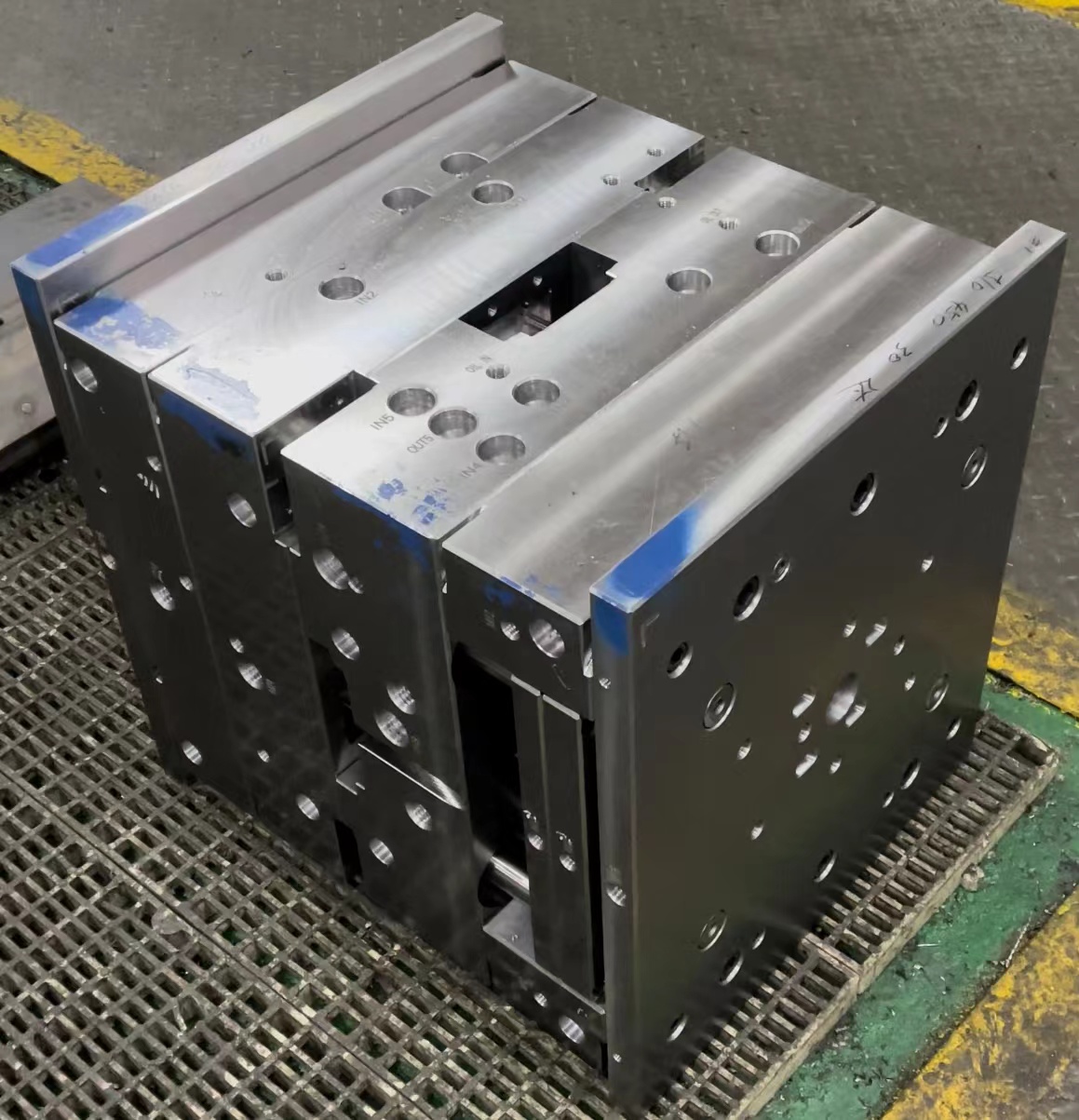
A copper block refers specifically to a machinized slab of solid un-annealed, sometimes even electroformed ultra-pure copper stock usually cut via diamond blade or CNC processes from bulk billets.
In my years of working around machinery, no component feels heavier than these things. That’s why proper storage and machining techniques must account for mass, weight, as well as conductivity concerns, which impact safety standards during operations involving hot surfaces and cutting tools alike.
Bare Copper Wire vs Bulk Copper Blocks—Understanding Differences & Interdependency
It may surprise some to find there is such overlap—but in practical applications, both bare wires (used primarily in cables/conductors) are deeply linked structurally and metallurgially to full-volume solids we call 'copper blocks'
| Basis for Difference | Copper Blocks | Bare Copper Wire |
|---|---|---|
| Typical Use | Durably conductive support base structures in electronics / machinery frames | Data/Power Transfer via insulated or non-insulated strands in cables. |
| Pure Metal Source | Cast or formed through direct smelting | Drawing filaments down through dies directly derived from copper billet |
| Oxidation Rate | Surface reacts only gradually; interior remains untouched if sealed properly. | Very thin skin oxidizes much more quickly unless coated with plating materials later. |
| Mobility vs Fixidity Factor | Limited mobility due to bulk density | Easily flexible and routable for complex routing inside equipment housings |
Tips When Selecting, Processing, Or Purchasing Copper Block Inventory
Here’s something nobody mentions during product demos: copper isn't interchangeable when purity levels or form matters. You can't swap standard Cu-FR grade blocks into aerospace or semiconductor fabrication chambers because impurities in certain forms can lead to massive yield drop-offs. Trust me, I learned it after spending hours running simulations trying to understand signal noise patterns on our test boards—we had a minor contamination from trace sulfur that came from poor alloy sourcing. Huge learning experience, but cost us days.
Road Ahead: Sustainability Aspects & Future Material Innovations With Copper-Based Components
Last few years have brought huge changes in terms of green manufacturing trends—more emphasis placed not on just functionality, but ecological impact too. Even in mining-heavy industries, efforts now focus toward recyclability improvements and lower processing temperatures. For engineers working alongside manufacturers aiming at sustainable practices? It starts directly upstream—in choosing suppliers committed to ethical mining, and ensuring minimal waste post-processing via digital modeling simulations.
New composite research also suggests ways we can blend pure copper with alloys containing rare elements like gallium or tin—to achieve better wear characteristics for high-stress sliding interfaces, especially when dealing with moving contacts under load pressure. There’s real potential to extend lifetime spans for copper components used within dynamic assemblies (such as rail gun conductive tracks in defense projects) through these developments.
Conclusion
To sum up: copper stands far beyond just another entry in periodic classification systems, and understanding it deeply opens new frontiers—not just theoretically but functionally. Copper blocks represent the foundational unit from which complex industrial designs can take shape reliably, backed up by the supporting players like bare copper wires for transmission needs or embedded integration in PCBs and connectors.
The importance extends even further once we dive deeper into chemical stability, sustainability, and innovation. What’s remarkable though, from first-hand experience, is the resilience—of the material itself as much as the community pushing it forward through challenges like climate policy shifts, fluctuating global commodity prices and geopolitical supply constraints
Whatever project I am involved in today—from renewable tech prototypes to automation-driven smart grid infrastructures—copper always ends up playing a bigger role than many expect upon planning. Its presence is quiet yet indispensable—a true workhorse, quietly enabling everything from the lighting circuits that power up buildings to high-volt pulse applications demanding millisecond precision response times from every connected node.
If there’s any parting takeaway from this lengthy breakdown: whether you buy copper blocks for immediate fabrication or you simply admire its properties, treat it as part of long-term material consideration—not a throwaway expense. Its value lies as much in utility as legacy preservation within systems where reliability cannot afford compromise.